





The hub is a critical component that ensures the wheels are securely connected to the vehicle’s suspension and steering systems, allowing the wheel to rotate smoothly around its own axis; if the ball bearing (roller bearing) inside the hub fails, it manifests itself—especially as the vehicle accelerates—as a continuous hum resembling an airplane taking off, resembling an airplane taking off, a grinding noise, or abnormal vibrations felt in the steering wheel. Understanding the operating principle of this mechanism—which bears the vehicle’s entire load, ensures the wheels make contact with the road at the correct angle, and is vital for flawless driving dynamics—will help you detect potential failure signs early and prevent life-threatening situations such as wheel lockup.
What Is a Hub?
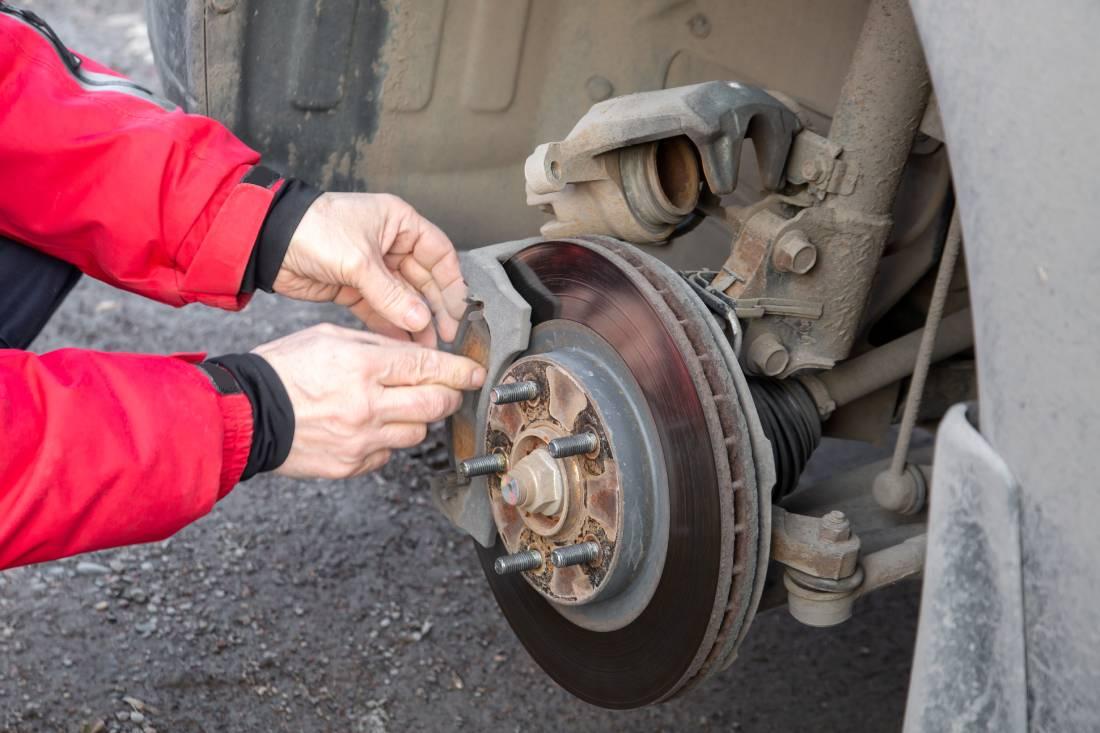
Also known as a wheel hub in automotive engineering, the hub is the primary load-bearing component—typically made of forged steel or high-strength cast iron—onto which the wheel and brake disc are directly mounted. Located at the very center of the vehicle’s running gear, this part is attached on one side to the fixed suspension system and control arms (axle carrier), while on the other side it supports the wheel that performs the rotational movement. It features studs onto which wheel lug nuts or bolts are fastened, thereby providing the physical connection between the tires and the vehicle through this central point.
Visually, it is a thick, heavy metal block with a milled (toothed) hole in the center for the axle shaft to pass through, and a flange structure on its outer edges to secure the disc and rim. In front-wheel-drive or rear-wheel-drive vehicles, the rotational force (torque) generated by the engine is transmitted directly to this milled bore via the drive shafts, and the vehicle begins to move as the hub rotates. For this reason, they are designed to be exceptionally sturdy, capable of withstanding massive torsional forces, vertical loads, and lateral deflections at all times.
What Is the Function of the Driv shaft?
The driv shaft’s primary function is to act as a safe load-bearing bridge by transferring the static load—comprising the vehicle’s weight in metric tons—and the dynamic forces generated while in motion to the wheels. When the vehicle enters a curve, brakes suddenly, or drives over a bumpy road, the intense lateral and vertical forces generated are first concentrated on the axle and then transmitted to the suspension system to be damped.
In addition, it houses the wheel speed sensors (ABS readers) required for the proper operation of Active Safety Systems (ABS, ESP, TCS), which are of vital importance in modern automobiles. The magnetic disc or toothed ring read by the sensors is positioned directly on or inside the hub. The stable, vibration-free rotation of the hub ensures that these sensors transmit the wheel’s instantaneous speed to the Engine Control Unit (ECU) with millisecond precision, thereby preventing the wheels from locking up during braking.
What Is a Hub Bearing (Wheel Bearing)?
The hub bearing, also known as the wheel bearing, is a precision mechanical unit pressed into the exact center of the hub using high-pressure press machines, enabling the wheel to rotate with virtually zero friction. It consists of two nested steel rings (cages) and extremely hard steel balls (or rollers) that continuously rotate within a special grease between these rings. While the outer ring is secured to the vehicle’s stationary frame, the inner ring rotates with the wheel, and the balls in between eliminate friction between these two opposing movements.
These fully sealed bearings are protected by special rubber seals that prevent dust, water, or mud from entering from the outside. Without ball bearings, it would be impossible to move the wheels of a massive vehicle due to excessive heat and energy loss caused by friction. The flawless roundness and strength of these balls are the sole mechanical requirements for the wheel to roll smoothly, quietly, and without vibration on the road.
How to Recognize a Porya Ball Bearing Failure?
When ball bearings—subject to constant rotational motion, vehicle weight, and impacts from the asphalt—wear out over time, they signal a failure by sending the driver clear auditory and physical cues that impair driving quality.
Humming and Squeaking Noises from the Wheels
The most common and first noticeable symptom of this problem is an annoying humming sound that can be heard inside the cabin. A continuous whirring sound, resembling the sound of a helicopter or airplane taking off, is heard, especially when the speed exceeds 50–60 km/s and as the vehicle accelerates. This resonant sound is produced as the rough surfaces of the damaged steel balls rub against each other. To test for the sound, gently turn the steering wheel to the right and left on a safe road; if you notice the sound increases in one direction and decreases in the other, there is definitely a problem with the bearing on the side under load.
Steering Wheel Vibration
As the ball bearings wear down and begin to disintegrate, millimeter-sized gaps form inside the bearing housing. As the wheel rotates, it can no longer remain on a fixed axis and begins to wobble at the micro level. At high speeds, this unbalanced rotation is transmitted directly to the steering wheel via the control arms and the steering box. Unlike vibration caused by brake discs, vibration caused by a worn-out wheel bearing is felt in direct proportion to speed while driving, even without applying the brakes.
A Pulling or Drifting Sensation in the Vehicle
A faulty ball bearing that does not rotate smoothly and has an increased coefficient of friction causes that wheel to rotate with greater difficulty compared to the other wheels. This difference in resistance causes the vehicle to constantly pull (drift) toward the wheel with the faulty ball bearing. If the vehicle immediately drifts to the right or left when you let go of the steering wheel on a straight highway, and you are certain that your wheel alignment is correct, the source of the problem is most likely the mechanical resistance created by a failing ball bearing.
Uneven Tire Wear
The physical play in the ball joint subtly distorts the wheel’s contact angle with the road (camber and toe angles). When the vehicle’s weight is applied to the wheel, this internal play prevents the tire from making full, flat contact with the asphalt, causing it to tilt slightly inward or outward. After a certain number of kilometers of use, it is observed that one side of the tire’s shoulder wears much faster than the other, in a wavy or jagged pattern.
ABS Warning Light Illumination
In many new-generation vehicles, the ABS sensor’s magnetic ring is integrated into the ball bearing’s own seal or is located immediately above the bearing. When the ball bearing wears out and creates a gap, the millimeter-level distance between the rotating magnetic field and the stationary sensor constantly changes, or the sensor is unable to read the wheel speed due to this fluctuation. When this occurs, the system activates its protective mechanism and illuminates the yellow ABS and ESP (skid) warning lights on the instrument panel.

What Are the Main Causes of Hub Sensor Failure?
Designed during the manufacturing process to last for many years, these components can lose their functionality much earlier than factory specifications due to a combination of various factors, such as external influences, driving habits, and physical wear and tear.
The Natural Wear and Tear Process
No mechanical part has an infinite lifespan. Steel balls that pass over one another millions of times with every wheel rotation lose their hardened surface layer after a certain number of usage cycles, even under the best conditions. This natural wear and tear, resulting solely from mileage, is the most common cause of a bearing failing due to the material reaching its fatigue limit.
Severe Impacts and Poor Road Conditions
Constant driving on unpaved, rough, and pothole-ridden roads has a hammer-like effect on the ball bearings. Hitting a deep pothole at high speed or slamming into a curb causes the balls inside the bearing to strike their seats violently, resulting in microscopic dents (notches) on the surface. Even a single notch can grow over time and serve as a sufficient starting point for the entire bearing to fail.
Use of Incorrect or Non-Standard Rims
Using rims that do not comply with the vehicle manufacturer’s specifications—such as those that protrude too far outward (with incorrect ET/offset values) or heavy spacers—shifts the wheel’s center of gravity outside the bearing housing. This creates a leverage effect, pushing the lateral load on the ball bearings far beyond their engineering limits. A hub bearing that would operate trouble-free for years with the original wheel can fail completely within a few tens of thousands of kilometers when paired with a heavy, offset aftermarket wheel.
Corrosion Caused by Water, Mud, and Moisture
Rust and corrosion are a bearing’s greatest enemies. When the seals protecting the balls tear due to external factors (such as wire entanglement, stone impact, or aging), rainwater or mud entering the bearing washes away the grease on the balls. Steel balls left without grease and exposed to water will rust and seize up in a very short time, increasing friction and causing the bearing to melt and break apart due to the heat.
How to Replace a Ball Joint?
This precise repair process, which requires specialized pulling tools, hydraulic press machines, and professional mechanical knowledge, involves technical details that make it impossible to perform in a home garage; therefore, it must be carried out at a fully equipped service center.
Identifying and Removing the Faulty Wheel
First, the vehicle is raised on a lift so that the wheels are suspended in the air. The mechanic quickly spins the wheels one by one by hand while placing one hand on the shock absorber spring. The faulty ball joint creates a distinct, crawling-like vibration on the spring as the wheel turns. Once the defective side has been definitively identified, the lug nuts are removed and the wheel is completely detached from the vehicle.
Removal of the Brake Caliper and Rotor
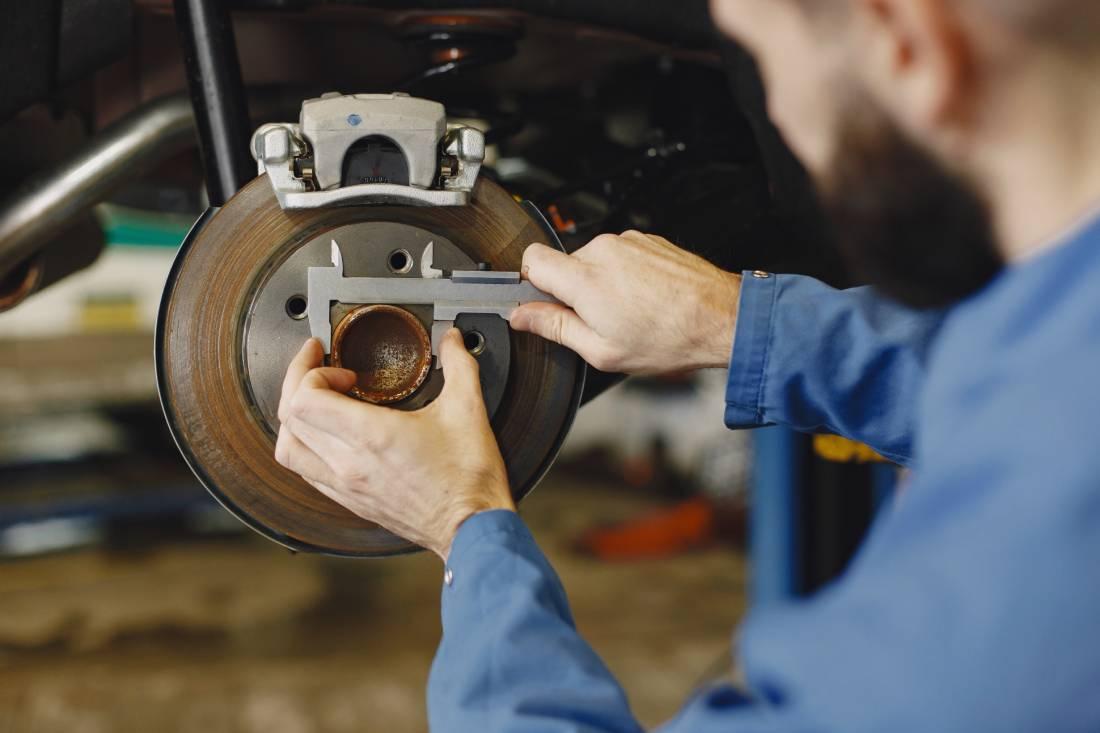
To access the hub, the front brake system must be disassembled. The caliper unit, which houses the brake pads, is removed from its bolts and suspended from the suspension with a wire, taking care not to damage the brake hose. Next, the brake disc, which is centered on the hub, is removed from its mounting. At this stage, the hub center and axle nut are fully exposed.
Removal of the Old Porya Bearing
The massive center nut connecting the axle shaft to the porya is removed using an air gun. The rotil, rot head, and shock absorber connections supporting the steering knuckle are disconnected, and the carrier unit is removed from the vehicle and placed on the workbench. Using a special hydraulic press, high-tonnage pressure is applied, and the jammed old steering knuckle hub and the disintegrated bearing are carefully pressed out of the carrier housing.
Installation of the New Steering Knuckle
The housing is thoroughly cleaned before the new ball bearing is installed. The new ball bearing must be seated properly in its housing by applying uniform pressure with a hydraulic press—never by striking it with a hammer. The orientation of the ball bearing is critical; the surface with the ABS magnetic sensor must absolutely be aligned toward the inside (facing the sensor). After the pressing process is complete, the hub is secured, and all parts are remounted to the vehicle in the same sequence and tightened to the appropriate torque values.
Frequently Asked Questions About the Hub
Vehicle owners have many questions regarding this component, which directly affects driving safety, including the repair process, associated risks, and costs.
Is It Safe to Drive a Vehicle with a Faulty Wheel Bearing?
It is definitely not safe. A wheel bearing that makes a humming noise and vibrates is nearing the end of its mechanical life, and the balls inside it reach extremely high temperatures due to excessive friction. Continuing to drive the vehicle in this condition can cause the ball bearings to weld to their sockets, the wheel to suddenly lock up while driving, or—in the worst-case scenario—the hub to break, causing the wheel to fly off the vehicle and leading to fatal accidents.
What Is the Lifespan of Wheel Bearings in Kilometers?
While there is no exact expiration date or kilometer limit for wheel bearings, their average lifespan ranges from 100,000 to 150,000 kilometers when used under standard road conditions and with original rim sizes. The geographical conditions in which the vehicle is used, frequent transport of heavy loads, or constant driving on rough roads can cut this average mechanical lifespan in half.
Should Wheel Bearings Be Replaced on One Side or Both?
Unlike suspension components that work in pairs, such as shock absorbers or brake discs, there is no requirement to replace both wheel bearings at the same time. Since the potholes and impacts experienced by the right and left wheels differ, one ball joint may be damaged while the other remains in very good condition. It is sufficient to replace only the defective ball joint, but it would be beneficial to have the other side inspected on a lift for general vibration and play.
Will a Wheel Bearing Failure Pass a Vehicle Inspection?
During technical inspections at vehicle inspection stations, the drivetrain and wheel clearances are meticulously examined using special vibration plates. If a noticeable physical play caused by a wheel bearing is detected, or if a distinct metallic grinding or humming sound is heard when the wheel is turned by hand, the vehicle is deemed to have a “major defect” on the grounds that it endangers driving and passenger safety and is failed. It is not possible to obtain inspection approval without repairs.
Does a Wheel Bearing Failure Increase Fuel Consumption?
Yes, it does—indirectly. A damaged wheel bearing with an increased coefficient of friction prevents the vehicle from coasting due to its own inertia (momentum) and creates physical resistance to the wheel’s rotation. To maintain the vehicle’s speed, the engine must overcome this increased rolling resistance, causing the driver to press the accelerator harder without realizing it. This increases the engine’s load, leading to a noticeable increase in fuel consumption.
Can a Porya Be Repaired, or Does It Need to Be Replaced?
Porya ball bearings are single-use, closed-loop systems that come permanently lubricated from the factory and sealed with leak-proof gaskets. Opening a malfunctioning, loose, or noisy ball bearing to replace the internal balls or attempt to silence the noise by re-greasing it is technically impossible and extremely dangerous. In the event of a malfunction, the only professional and safe method is to remove the old part and press-fit an original, warranty-backed new ball bearing in its place.
In summary, the steering ball joint and its ball bearing are one of the most critical components for driving safety, providing both the load-bearing structure and the freedom of movement for the wheels—which are your vehicle’s sole point of contact with the road. Symptoms of a malfunction—such as increasing humming noises as speed increases, vibrations felt through the steering wheel, or the vehicle veering off course—should never be ignored under the assumption that they “don’t prevent the vehicle from being driven.” By consulting a specialist service at the first sign of a problem to have the faulty wheel bearing replaced with a new one using the press method, you will not only protect yourself from irreparable accidents such as wheel lockup but also restore your vehicle to its factory-original quiet, comfortable, and safe driving dynamics.